Meet Tali
Meet Tali
Portland Oregon Impressionist Fine Art Painter and Portrait Artist


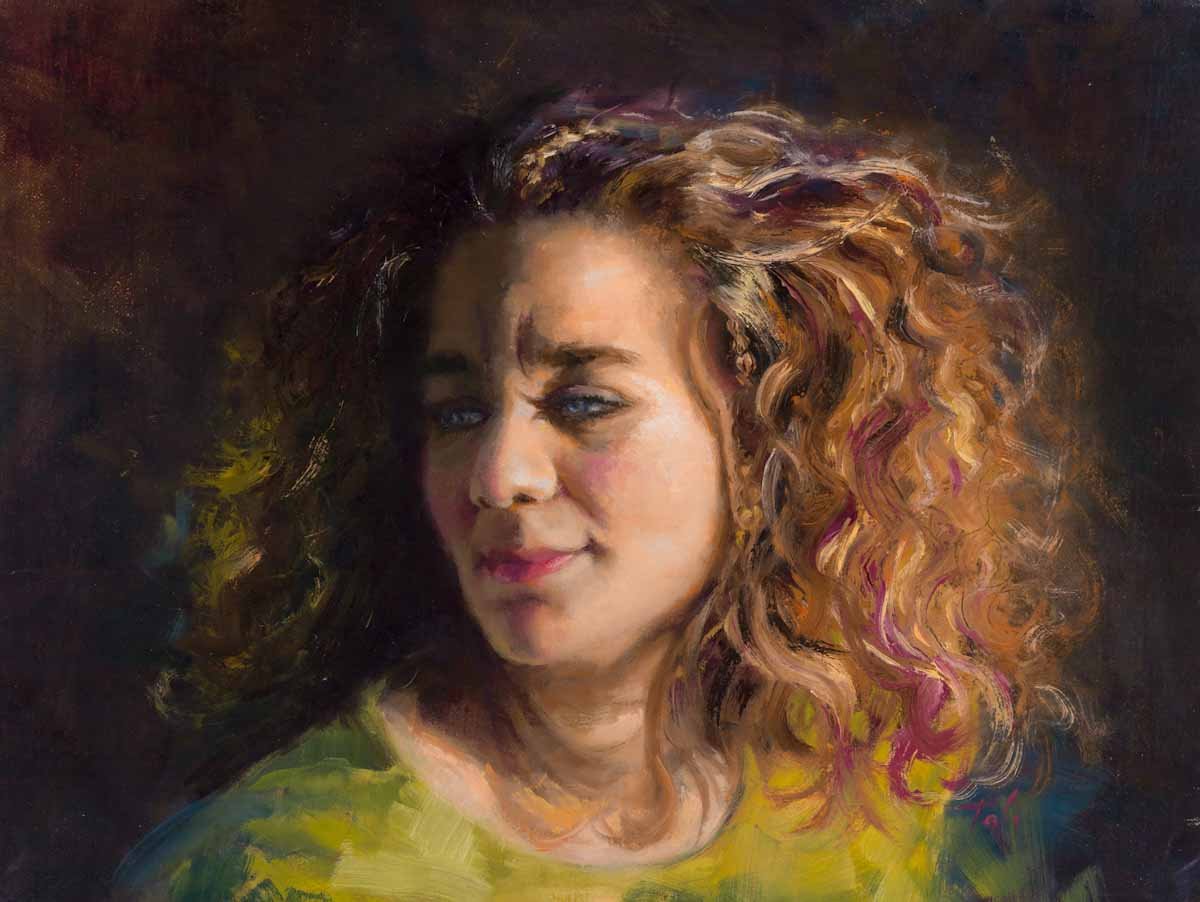
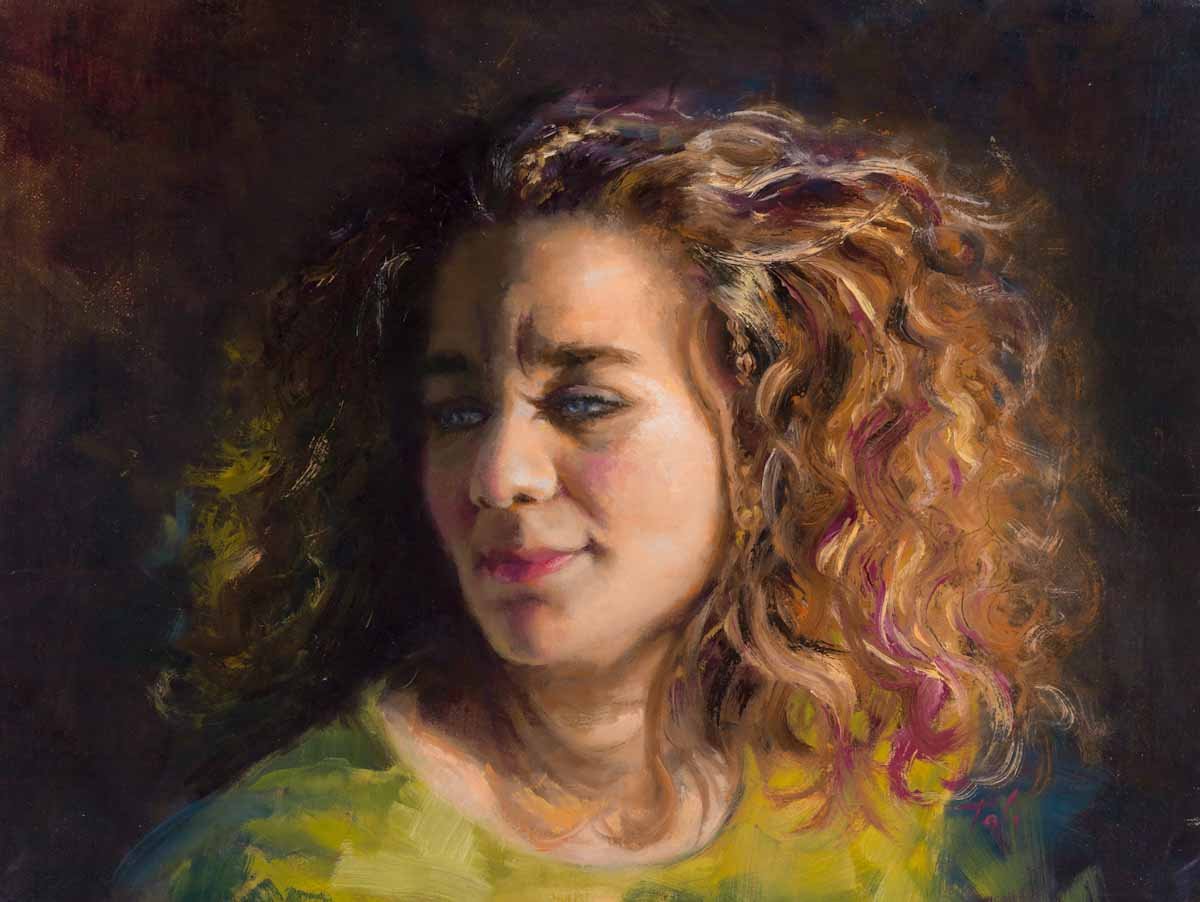
The hints of my future as an impressionist artist were first ignited while watching my mother paint in Israel, the country of my birth. I have been drawing, creating, singing and playing music for as long as I can remember. This flame fueled by passionate mentors and dedicated painters has now become impossible to extinguish.
I don't believe in talent. I worked hard and long to develop my drawing and painting ability. It took many years for me to show any sort of gift or skill in drawing. I took any and all classes my circumstances allowed. I learned and used new technology to its full advantage in order to learn. My innate gift has always been my enthusiasm and determination.
After almost 20 years of a rewarding career in commercial art and graphic design, I could no longer contain my intense desire to paint. I created my first adult painting on my children's easel using department store acrylics. Workshops with masters Shuqiao Zhou, Daniel Gerhartz, Carolyn Anderson, and Larry Seiler cemented my love of working with oils and working from life. My adopted home in the Pacific Northwest provided an inspiring backdrop to explore nature’s magnificent landscapes filled with every color harmony imaginable. My painting friends made for a tremendous support group, they became my tribe and my family when I felt so far removed from my homeland.
Creating beautiful paintings is my pursuit of truth and human connectedness. Portraits and figures have remained my first love. Yet in exploring landscapes, florals, and still lifes I have found a new voice for my expression. When I create a painting, my primary goal is to emote a passion for beauty, and hope for humanity. I do this by focusing on the fascinating qualities of color and light.
I paint and sketch from life whenever possible. Whether in plein air (painting in open air) or working with live models I always prefer to experience my subject first hand. Being a colorist by nature, I want to see the colors through my own eyes, rather than through a mechanical camera lens. Whether muted or bright, colors are critical notes to my painted melodies. Even when working with photographic references, I prefer to strictly use my own, feeling I only have the authority to represent something I have experienced myself.
Through the paint I converse with humanity. I share a thought, a memory, an insight. I search the for permanence within the ephemeral, order within chaos, and calmness within life’s storms. Living in a time in history that is over-saturated with meaningless noise and imagery my painterly brush strokes seek to clarify my small but unique human experience.
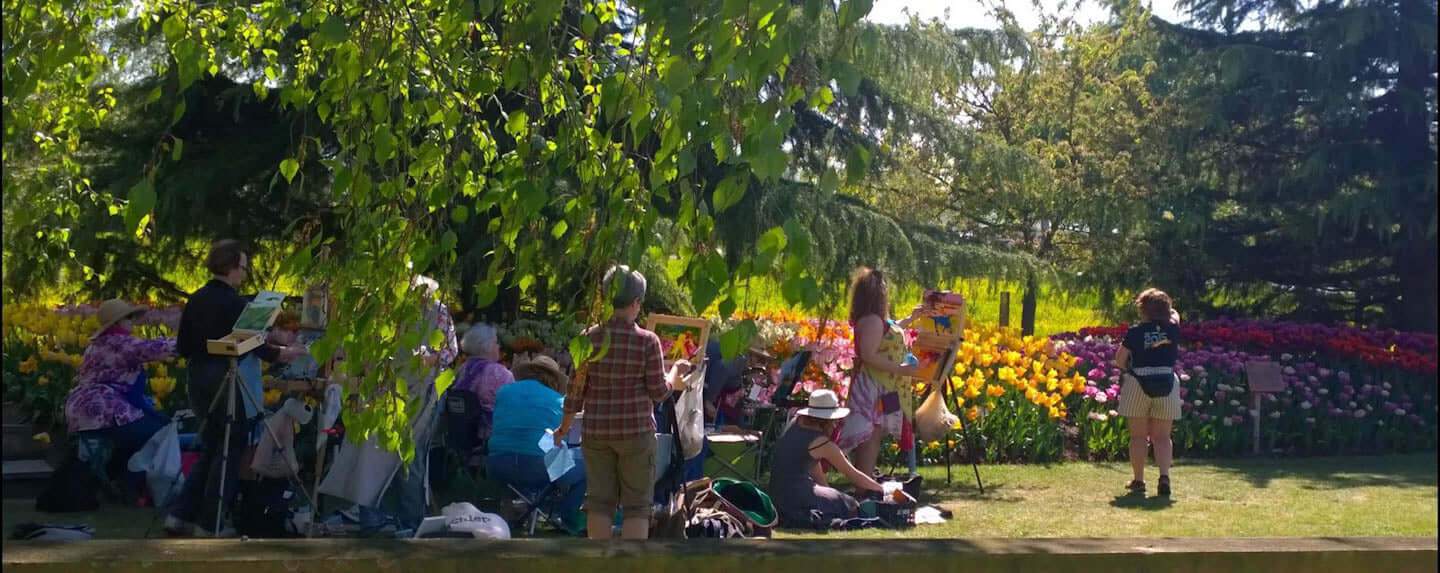
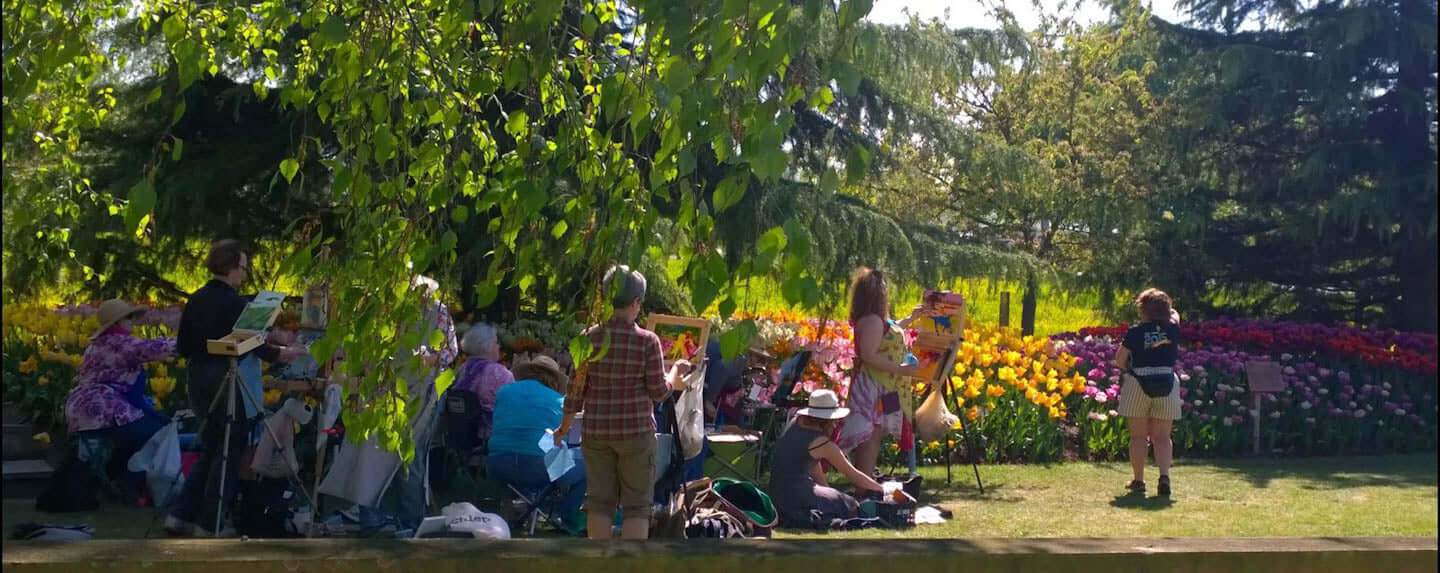
2020 BFA in Drawing and Painting with honors, Pacific Northwest College of Art (teach-out program Oregon College of Art and Craft), Portland, Oregon
1990 AA in Graphic Design, Collins College, Tempe, Arizona
2018 General Transfer with honors, Portland Community College, Portland, Oregon
2011 Portrait & Figure Painting with Carolyn Anderson, Scottsdale Artists’ School, Scottsdale, Arizona
2010 Portrait & Figure Oil Painting from Life with Daniel Gerhartz, Gerhartz Studio, Kewaskum, Wisconsin
2009 Portrait & Figure Painting with Shuqiao Zhou, Scottsdale Artists’ School, Scottsdale, Arizona
1997 Macintosh Summit, University of Santa Barbara, California, Santa Barbara, California
2020
Caryn Daschbach Award from Oregon College of Art and Craft
FAV15% BoldBrush Competition: January, Miriam Self Portrait; March, Community Remains Portrait 39; August, Inner Folds Abstract Irises Color Fields
2018
June Art Muse Gallery Representation Award Finalist, Girl with Flower Tattoo
Ben Selling Scholarship, Portland, Oregon
Kirchhoff Family Fine Arts Scholarship, Portland, Oregon
Ford Family Foundation Re-Restart Scholarship, Eugene, Oregon
FAV15% BoldBrush Competition: March, Spanish Rose; June, Little Miss Sunshine
2017
Marylhurst Award Portland Community College Exhibit: Evolution, Portland, Oregon
Richard Helzer Memorial Art Portland Community College Scholarship, Portland, Oregon
FAV15% BoldBrush Competition: January, February, March, September, Girl with Flower Tattoo
2016
Richard Helzer Memorial Art Portland Community College Scholarship, Portland, Oregon
FAV15% BoldBrush Competition: March, Little Miss Sunshine; July, Elfin Beauty; August, Work in Progress Self Portrait; December, Out of Dust
2015
Pacific Northwest Plein Air Event, Columbia Center for the Arts, Hood River, Oregon
Toledo Plein Air, Yaquina River Museum of Art, Toledo, Oregon
FAV15% BoldBrush Competition: September, Morning Reverie
2011
FAV15% BoldBrush Competition: April, Sammy in Blue
Scottsdale Artists’ School Best & Brightest Juried Exhibition: Child’s Play, Reflections
2010
Scottsdale Artists’ School Best & Brightest Juried Exhibition: Local Color
2008
RayMar Art Competition October Finalist: Last Stand
1993
PRSA 1st Place for Internal Publication (Anchorage Times)
1989
United Alaskan Artists Scholarship
2020
From Concentrate: Online Exhibiton of OCAC at PNCA BFA Thesis Canidates, Disjecta Contemporary Art Center, Portland, Oregon
2019
Hilltop, Pacific Northwest College of Art, 511 Building - Arlene and Harold Schnitzer Center for Art and Design, Gallery 157, Portland, Oregon
2018
Foundations, Vollum Building, Oregon College of Art and Craft, Portland, Oregon
Advanced Drawing and Painting Exhibition, Vollum Building, Oregon College of Art and Craft, Portland, Oregon
2017
Keep Going! Sylvania Student Art Exhibition, North View Gallery, Portland, Oregon
2016
Impressionism, Two Woman Exhibit with Karen Whitworth, Trinity Episcopal Cathedral, Portland, Oregon
2015
Oregon Lavender Plein Air Paint Out, Newberg, Oregon
2014
Painted Ladies Exhibit, Town Square Gallery, Wasilla, Alaska
2013
Oregon Lavender Plein Air Paint Out, Yamhill, Oregon
2012
5th Annual Plein Air Weekend Benefit, Anchorage, Alaska
Who Let the Girls Out, exhibit and workshop, Shane Lamb Studio, Palmer, Alaska
2011
Plein Air in the Garden, Palmer Museum and Visitor Center, Palmer, Alaska
4th Annual Plein Air Weekend Benefit, Anchorage, Alaska
Nowhere but Up, Annual Art Exhibit at the Office of Neal Martin, Two Woman Exhibit with Marie Green, Anchorage, Alaska
2010
Annual Art Exhibit at the Office of Neal Martin, Two Woman Exhibit with Karen Whitworth, Anchorage, Alaska
2009
Annual Art Exhibit at the Office of Neal Martin, Two Woman Exhibit with Kimberly Bustillos, Anchorage, Alaska
Two Woman Exhibit with Amber Johnson, Pia’s Custom Framing, Wasilla, Alaska
2008
Solo Exhibit, Artic Rose Gallery, Anchorage, Alaska
First Friday Solo Exhibit, Artic Poppy Boutique, Anchorage, Alaska
Bartman, Jake. "Two Of A Kind". Wilsonville Spokesman, 2016, https://pamplinmedia.com/wsp/134-news/294532-170580-two-of-a-kind.
The Chelsea Magazine Company, “Daily art challenge: How to paint with passion”, Artists & Illustrators, Available at: https://www.artistsandillustrators.co.uk/how-to/oil-painting/1569/daily-art-challenge-how-to-paint-with-passion.
Associate member American Impressionist Society
Associate member Portrait Society of America
I search the for permanence within the ephemeral, order within chaos, and calmness within life’s storms. ~Tali
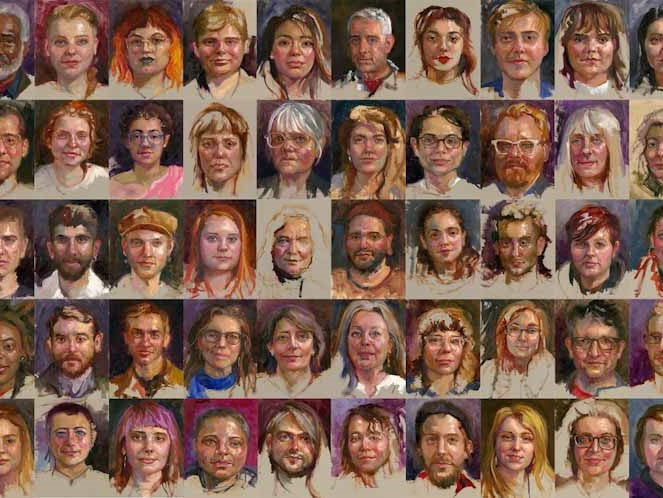
Many of Tali's portrait sitters have expressed how the intimate process of being painted was profoundly therapeutic. The portrait session is usually relaxing and self-affirming. Tali is uniquely committed to making commissioned portraits affordable and accessible. Her roll as a portraitist takes in many forms depending on the needs of her sitters. She is inspired by concepts embedded within the study of sociology, anthropology, and psychology, and of course the qualities of light and color inherent in her favorite impressionist artists artwork.
Community Remains is a series of 51 oil portraits painted from life. The portrait paintings were part of a virtual online exhibition May 2020 at Disjecta Contemporary Art Center for Pacific Northwest College of Art and Oregon College of Art and Craft (now closed).
Read the thesis in a four part blog. The display includes Tali’s insightful self portrait that exudes the contemporary perspective of a woman artist. View project portfolio.
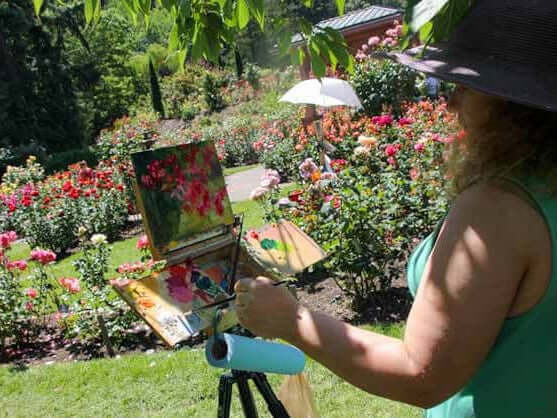
Formally a graphic designer and illustrator, visual artist Talya Johnson (Tali) is a modern art impressionist painter living in the Pacific Northwest. She received her Bachelor of Fine Arts (BFA) from Oregon College of Art and Craft (OCAC) and Pacific Northwest College of Art (PNCA) at Portland Oregon. Tali's original contemporary art is largely figurative (though she also offers abstract canvas wall art) and stylistically influenced by both the French Impressionist style and traditional Academic Realism. Ever vibrant, her modern impressionist paintings are painterly accounts of her modern life contemporary perspective. Whether creating an oil portrait, still life, or abstract landscape with a palette knife, Tali believes in recording what she has experienced first hand. Painting and drawing from life in the impressionism style whenever possible she imbues her visible brushstrokes with a liminal dream-like quality that dances between realism and idealism.
Filled with colour and light, Tali's floral wall art, landscape painting, commissioned portraits, impressionist painting, and home decor accessories are cherished around the world by numerous art collectors.
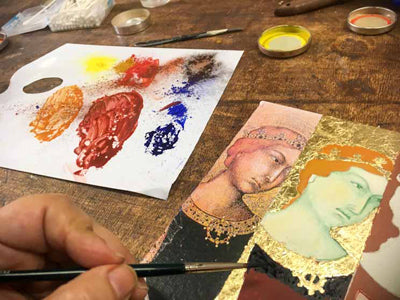
Talya Johnson makes art that will withstand the test of time. The enduring nature of pastel and original oil painting has long interested this fine artist who is conceptually driven by idea of heirlooms and artifacts. A true artisan, her passion for art history and contemporary craft includes all the essential elements of commitment to quality: education from the best sources and painters of Impressionist art, attention to detail, years of honing her craft through trial and error, and a tenacious dedication to both the form, function and longevity of her Impressionist work.
In 2019 Tali had the privilege of studying Art Conservation in Florence, Italy to ensure her oil painting technique is modeled after time-honored traditional methods. While in art school, Tali enjoyed experimenting with materials and multi-media techniques, she uses archival materials for her professional practice. Her works of art are lovingly crafted to be treasured for many generations to come, inscribing your own footprint into the annals of history.